How to Analyze Financial Statements Step by Step for Beginners
In today’s fast-paced financial landscape, understanding how to read and interpret financial statements is a crucial skill for anyone looking to make informed decisions about investments or business management. Whether you’re an aspiring entrepreneur or simply intrigued by the world of finance, getting a handle on these documents will empower you to evaluate a company’s performance accurately. In this comprehensive guide, we will walk you through the essential components of financial statements and the step-by-step process for analyzing them effectively. By the end, not only will you grasp the importance of Financial Statement Analysis, but you’ll also be equipped with common ratios and actionable tips that will enhance your analytical skills. Join us as we demystify the intricacies of financial statements for beginners and set you on a path to financial literacy.
Understanding Financial Statements: A Beginner’s Guide
Financial statements are crucial documents that provide insights into a company’s financial performance and position. For beginners, grasping these statements is essential for making informed decisions. Here’s what you should know:
- Types of Financial Statements:
- Income Statement: Reveals profit or loss over a specific period.
- Balance Sheet: Displays assets, liabilities, and equity at a given time.
- Cash Flow Statement: Tracks cash inflows and outflows during a period.
| Statement Type | Purpose | Key Elements |
|---|---|---|
| Income Statement | Measures profitability | Revenues, expenses, net income |
| Balance Sheet | Shows financial position | Assets, liabilities, shareholders’ equity |
| Cash Flow Statement | Evaluates liquidity | Operating, investing, financing activities |
Understanding these basic components will pave the way for effective Financial Statement Analysis. By familiarizing yourself with these elements, you’ll be better prepared to interpret financial data and gauge a company’s health effectively.

The Importance of Financial Statement Analysis
Financial statement analysis is essential for both new investors and seasoned professionals. By examining these statements, you can gain a deeper understanding of a company’s financial health and operational efficacy. Here are some key reasons why this analysis matters:
1. Informed Decision-Making
Investors and stakeholders rely on financial insights to make educated choices. Understanding the numbers helps assess whether to buy, hold, or sell assets.
2. Performance Evaluation
Analyzing financial statements allows stakeholders to track performance over time. It highlights trends and enables comparisons with competitors.
3. Risk Assessment
Identifying potential financial pitfalls early is crucial for risk management. By reviewing financial health indicators, companies can mitigate risks proactively.
Here’s a quick reference table summarizing the importance:
| Key Reason | Description |
|---|---|
| Informed Decision-Making | Facilitates educated investment choices |
| Performance Evaluation | Tracks growth trends and compares with competitors |
| Risk Assessment | Identifies potential financial issues early |
Understanding these elements empowers stakeholders to navigate the financial landscape more effectively. Emphasizing the significance of this analysis is critical for anyone wishing to succeed in the business realm.
Key Components of Financial Statements
Understanding the key components of financial statements is crucial for effective analysis. Financial statements typically comprise three primary elements:
- Income Statement: This document outlines a company’s revenues, expenses, and profits over a specific period. It provides insight into the business’s operational efficiency and profitability.
- Balance Sheet: A balance sheet lists assets, liabilities, and equity at a particular point in time. This snapshot reveals the financial position of the company, illustrating what it owns versus what it owes, and helps assess liquidity and financial health.
- Cash Flow Statement: This statement tracks cash inflows and outflows, segregating operational, investing, and financing activities. Analyzing cash flows is essential as it indicates how well a company generates cash to meet its obligations.
Comparison Table:
| Component | Focus Area | Key Insight |
|---|---|---|
| Income Statement | Revenue vs. Expenses | Profitability |
| Balance Sheet | Assets vs. Liabilities & Equity | Financial Position |
| Cash Flow Statement | Cash Inflows & Outflows | Cash Management |
Together, these components provide a comprehensive view of the company’s financial health, and understanding them is vital for anyone engaged in Financial Statement Analysis.
Step-by-Step Guide to Analyzing Financial Statements
Analyzing financial statements might seem daunting at first, but following a clear, step-by-step approach simplifies the process. Here’s how to break it down:
- Gather Financial Statements: Collect the balance sheet, income statement, and cash flow statement.
- Review the Balance Sheet:
- Assess assets, liabilities, and equity.
- Calculate the debt-to-equity ratio for financial leverage insights.
- Examine the Income Statement:
- Look at revenue, expenses, and net income.
- Determine the gross margin to evaluate profitability.
- Analyze the Cash Flow Statement:
- Examine cash flows from operating, investing, and financing activities.
- Assess the free cash flow to understand liquidity.
Key Metrics to Watch
| Metric | Significance |
|---|---|
| Current Ratio | Measures short-term liquidity |
| Return on Equity (ROE) | Indicates how effectively equity is used |
| Gross Profit Margin | Reflects operational efficiency |
| Operating Cash Flow | Shows cash generated from operations |
By methodically reviewing these statements and metrics, you can gain valuable insights into a company’s financial health. This structured approach will enhance your understanding of Financial Statement Analysis and empower you to make informed decisions.
Common Ratios Used in Financial Statement Analysis
When evaluating financial health, several ratios provide valuable insights. Here are some key ones you should know:
| Ratio | Formula | Purpose |
|---|---|---|
| Current Ratio | Current Assets ÷ Current Liabilities | Assesses short-term liquidity |
| Debt-to-Equity Ratio | Total Liabilities ÷ Shareholder’s Equity | Measures financial leverage |
| Return on Equity (ROE) | Net Income ÷ Shareholder’s Equity | Evaluates profitability and efficiency |
| Gross Profit Margin | (Gross Profit ÷ Revenue) × 100 | Indicates the percentage of revenue exceeding direct costs |
These ratios not only help identify trends over time but also enable comparisons with industry peers. Understanding these metrics equips beginners with essential tools for informed decision-making. By focusing on key ratios, you can straightforwardly navigate the complexities of business performance and financial stability.
Tips for Effective Financial Statement Analysis
To enhance your skills in analyzing financial data, employing a few strategic tips can make a significant difference.
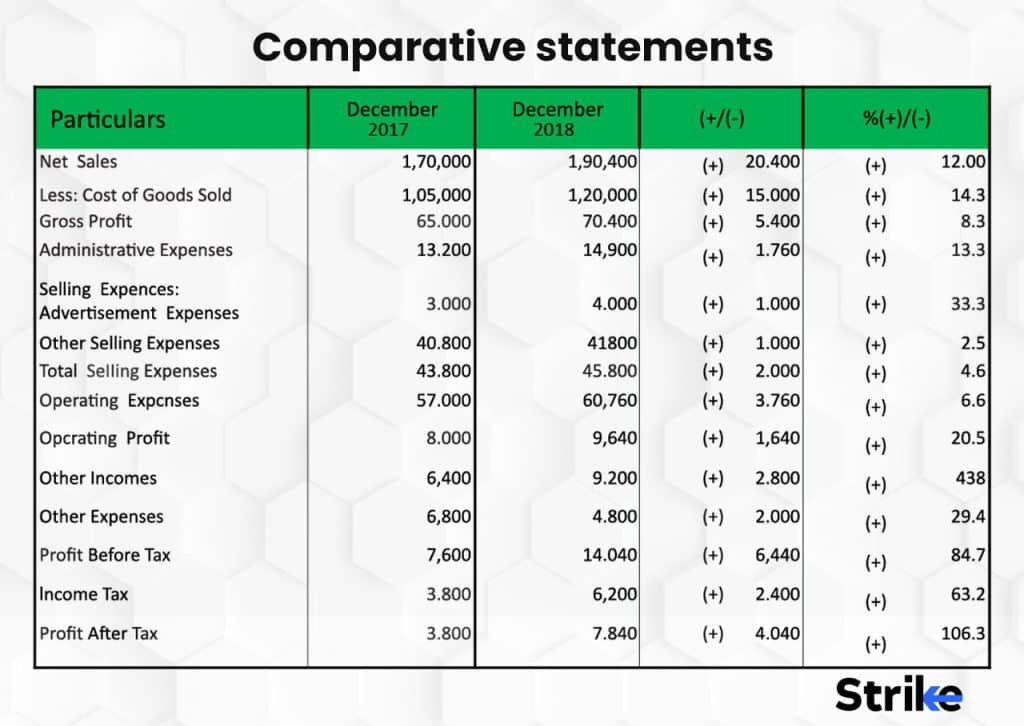
1. Focus on Trends: Always examine data over multiple periods. Identifying trends in revenues, expenses, and profits can reveal the company’s operational health.
2. Use Ratios Wisely: Ratios simplify comparisons, so familiarize yourself with key indicators like the current ratio, debt-to-equity ratio, and return on equity. Creating a comparison table can visually represent these ratios side by side for more profound insights.
3. Context Matters: Always analyze numbers in context. A figure may appear strong or weak depending on industry standards, economic conditions, or company history.
| Ratio | Company A | Company B | Industry Average |
|---|---|---|---|
| Current Ratio | 1.5 | 1.2 | 1.4 |
| Debt-to-Equity | 0.5 | 0.8 | 0.6 |
| Return on Equity | 15% | 10% | 12% |
4. Be Critical: Don’t take figures at face value. Investigate unusual changes in financial statements; they might indicate potential issues.
By following these tips, you can ensure a thorough and meaningful analysis, ultimately enabling better investment and business decisions.
Frequently Asked Questions
What are the key financial statements that I should analyze as a beginner?
As a beginner analyzing financial statements, you should focus on three key documents: the Income Statement, the Balance Sheet, and the Cash Flow Statement. The Income Statement shows a company’s revenues and expenses, highlighting its profitability over a specific period. The Balance Sheet provides a snapshot of a company’s assets, liabilities, and shareholders’ equity at a particular moment in time, reflecting its financial health. The Cash Flow Statement tracks the flow of cash in and out of the business, indicating how well the company generates cash to meet its obligations and invest in growth.
How do I start analyzing financial statements effectively?
To start analyzing financial statements effectively, begin by familiarizing yourself with the structure and components of each statement. Review the Income Statement to assess profitability trends, looking at key metrics like gross profit, net income, and earnings per share. Next, examine the Balance Sheet to evaluate liquidity ratios, debt levels, and asset management. Finally, use the Cash Flow Statement to understand cash generation from operations, investing activities, and financing, ensuring the company maintains a healthy cash flow. It’s helpful to compare these statements against industry benchmarks or historical data for context.
What ratios can I use to analyze financial statements, and what do they indicate?
When analyzing financial statements, there are several important ratios you can utilize. The Price-to-Earnings (P/E) ratio measures a company’s current share price relative to its per-share earnings, indicating investor expectations about future growth. The Current Ratio compares current assets to current liabilities, revealing the company’s short-term liquidity. The Debt-to-Equity ratio illustrates the balance between debt and shareholder equity, helping assess financial risk. Profitability ratios, such as Return on Equity (ROE) and Gross Margin, provide insights into how effectively a company converts sales into profits. Understanding these ratios is essential for drawing meaningful conclusions from the financial data.
Why is it important to analyze financial statements regularly?
Regular analysis of financial statements is crucial for several reasons. Firstly, it helps you track a company’s financial performance over time, identifying trends that may indicate growth or potential red flags. Secondly, frequent analysis aids in making informed investment decisions, as it offers insights into the financial health and operational efficiency of the business. Monitoring these statements also allows stakeholders to adjust their strategies proactively, enhancing financial stability. Ultimately, regular financial statement analysis empowers both individuals and businesses to better navigate the complexities of the financial landscape.