Ratio Analysis Explained: ROI, ROE, EPS and More for Beginners
Are you looking to enhance your financial literacy and make informed investment decisions? Understanding key financial metrics can be your ticket to navigating the complex world of finance with confidence. In this blog post, we’ll demystify Ratio Analysis, focusing on essential concepts like Return on Investment (ROI), Return on Equity (ROE), and Earnings Per Share (EPS). We’ll also delve into other important financial ratios and show you how to leverage this information to fuel your investment strategies. Whether you’re a complete beginner or just need a refresher, this guide will equip you with the knowledge you need to better assess the profitability and sustainability of potential investments.
What is Ratio Analysis?
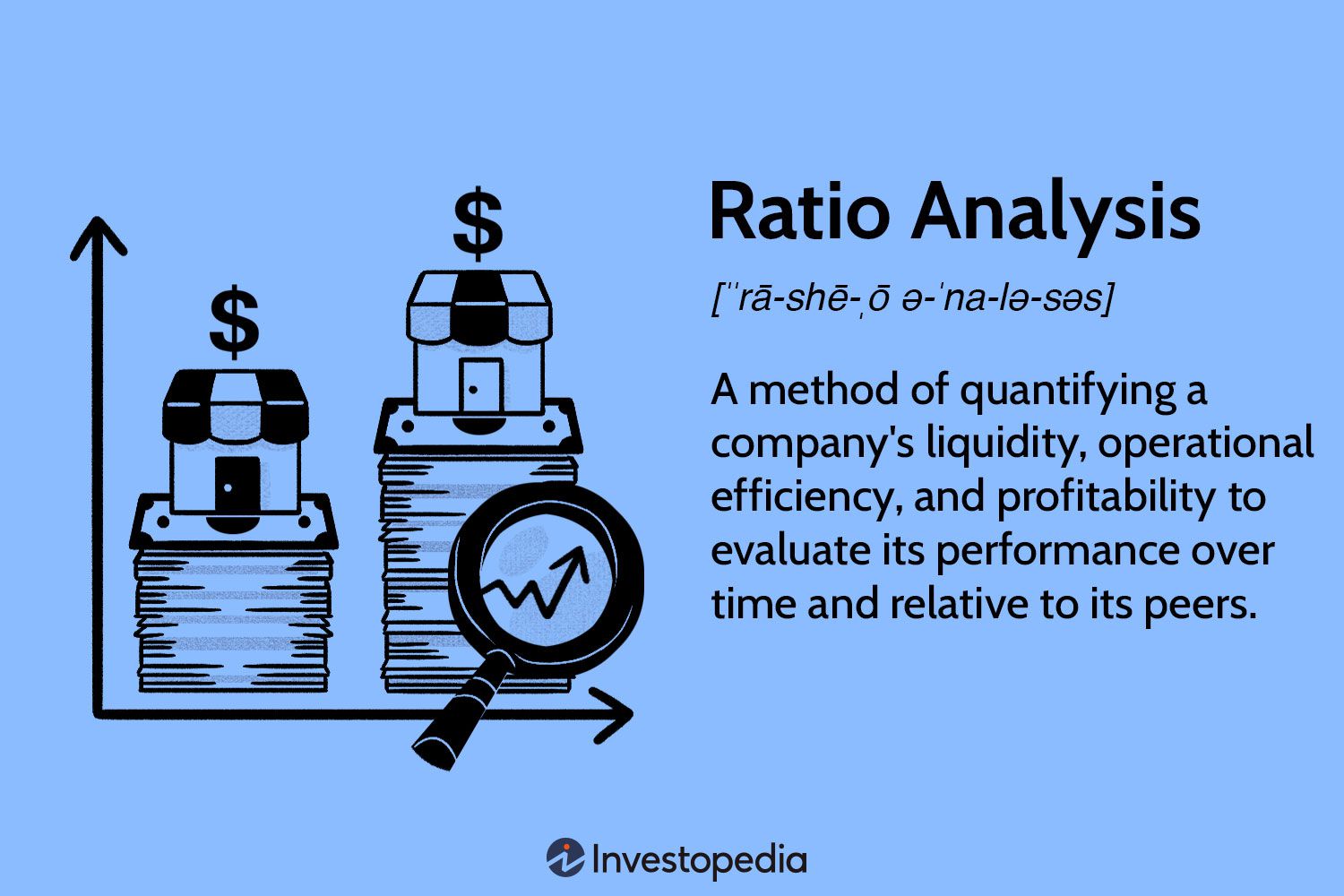
Ratio Analysis is a powerful financial tool used to evaluate a company’s performance and financial health by analyzing various metrics. By comparing different financial variables, it helps investors, analysts, and stakeholders make informed decisions. Here are some key points to understand:
- Purpose: To identify trends, assess profitability, and gauge operational efficiency.
- Types of Ratios: Includes profitability ratios, liquidity ratios, leverage ratios, and efficiency ratios.
- Commonly Used Ratios:
| Ratio Type | Example Ratios |
|---|---|
| Profitability Ratios | Return on Investment (ROI), Return on Equity (ROE) |
| Liquidity Ratios | Current Ratio, Quick Ratio |
| Leverage Ratios | Debt to Equity Ratio, Interest Coverage Ratio |
| Efficiency Ratios | Asset Turnover Ratio, Inventory Turnover Ratio |
Utilizing these ratios assists in benchmarking against peers and industry standards. With Ratio Analysis, one can pinpoint strengths and weaknesses, ultimately guiding impactful investment decisions.
Understanding Return on Investment (ROI)
Return on Investment (ROI) is a critical metric used to evaluate the efficiency of an investment. By measuring the gain or loss generated relative to the amount invested, investors can assess performance clearly.
Key Points of ROI:
| Aspect | Details |
|---|---|
| Formula | (Net Profit / Investment Cost) x 100 |
| Significance | Indicates profitability; helps compare investments |
| Time Frame | Can be evaluated over varying periods |
| Investment Types | Applicable to stocks, real estate, and more |
A higher ROI indicates a more fruitful investment, making it essential for investors to focus on this ratio when making decisions. Additionally, understanding ROI can help in identifying the potential risks associated with various investments. By assessing ROI alongside other metrics, investors are better equipped to make informed financial choices.
Demystifying Return on Equity (ROE)
Return on Equity (ROE) is a crucial financial metric that represents a company’s profitability relative to shareholders’ equity. It illustrates how effectively management utilizes equity financing to generate earnings. Calculating ROE involves the formula:
ROE = Net Income / Shareholder’s Equity
This ratio provides insight into a firm’s performance; a higher ROE indicates a more efficient use of equity. For instance, a company generating $100,000 in net income with $500,000 in equity has an ROE of 20%.
| Company Name | Net Income ($) | Shareholder’s Equity ($) | ROE (%) |
|---|---|---|---|
| Company A | 100,000 | 500,000 | 20 |
| Company B | 150,000 | 600,000 | 25 |
| Company C | 200,000 | 1,000,000 | 20 |
Investors often compare ROE values across companies within the same industry to gauge which firms are performing better. Ultimately, understanding ROE can significantly aid in making informed investment decisions.
Exploring Earnings Per Share (EPS)
Earnings Per Share (EPS) is a crucial financial metric used by investors to gauge a company’s profitability on a per-share basis. By analyzing EPS, investors can make informed decisions about their investments. Here are some key insights:
- Definition: EPS is calculated by dividing the net income of a company by the number of outstanding shares.
- Importance: A higher EPS indicates greater profitability, making the company more attractive to potential investors.
- Types of EPS:
- Basic EPS: Simple calculation reflecting total net earnings divided by the number of shares.
- Diluted EPS: Accounts for potential dilution from convertible securities, options, etc.
| EPS Type | Calculation | Significance |
|---|---|---|
| Basic EPS | Net Income / Outstanding Shares | Reflects straightforward profitability |
| Diluted EPS | Net Income / (Outstanding Shares + Dilutive Shares) | Assesses real earnings potential factoring in dilutive instruments |
Using Ratio Analysis, tracking EPS over time can highlight trends in a company’s earnings and help investors compare its profitability with peers. Understanding EPS alongside other financial metrics is essential for holistic investment evaluations.

Other Important Financial Ratios
In addition to Ratio Analysis focusing on ROI, ROE, and EPS, there are several other key financial ratios that investors should consider. These ratios offer deeper insights into a company’s performance and financial health. Below are some vital financial ratios along with their significance:
| Financial Ratio | Description |
|---|---|
| Current Ratio | Measures liquidity by comparing current assets to current liabilities. A ratio above 1 indicates good short-term financial health. |
| Quick Ratio | Similar to the current ratio but excludes inventory. It’s a stringent measure of liquidity. |
| Debt-to-Equity Ratio | Assesses financial leverage by comparing total debt to shareholder’s equity. A lower ratio suggests less risk. |
| Price-to-Earnings (P/E) Ratio | Evaluates the company’s current share price relative to its earnings per share, indicating stock valuation. |
| Gross Margin | Demonstrates the percentage of revenue exceeding the cost of goods sold, revealing profitability at a fundamental level. |
Understanding these ratios allows investors to make more informed decisions when analyzing a company’s financial stability and operational efficiency. Using Ratio Analysis effectively can help you navigate the complex world of investments with greater confidence.
How to Use These Ratios for Investment Decisions
When it comes to making informed investment decisions, utilizing Ratio Analysis can be a game-changer. Investors leverage key financial ratios—such as Return on Investment (ROI), Return on Equity (ROE), and Earnings Per Share (EPS)—to evaluate a company’s financial health and performance.
Comparison Table of Key Ratios:
| Ratio | Formula | Purpose |
|---|---|---|
| ROI | (Net Profit / Investment) * 100 | Measures the efficiency of an investment. |
| ROE | (Net Income / Shareholder’s Equity) * 100 | Indicates how well a company uses equity to generate profit. |
| EPS | Net Income / Outstanding Shares | Provides insight into profitability on a per-share basis. |
By comparing these ratios within an industry or against competitors, investors can identify strong potential investments or alert themselves to underperforming companies. Smart investors not only assess these ratios individually but also consider them collectively to develop a holistic view of a company’s financial position, ultimately guiding their investment decisions effectively.
Frequently Asked Questions
What is Ratio Analysis and why is it important for beginners?
Ratio analysis is a quantitative method that involves evaluating the financial performance of a company by studying its financial statements, such as the balance sheet and income statement. For beginners, it is crucial because it helps them understand a company’s operational efficiency, profitability, and overall financial health. By using key ratios like Return on Investment (ROI), Return on Equity (ROE), and Earnings Per Share (EPS), beginners can compare financial performance with industry standards, make informed investment decisions, and assess the potential risks associated with investing in a company.
How do you calculate Return on Investment (ROI) and what does it signify?
Return on Investment (ROI) is calculated by taking the net profit from an investment and dividing it by the cost of the investment, then multiplying the resulting figure by 100 to express it as a percentage. The formula is: ROI = (Net Profit / Cost of Investment) x 100. A higher ROI indicates a more profitable investment, signifying that the investment has generated more returns relative to its cost. For beginners, understanding ROI is essential as it provides insight into how effectively their capital is being utilized in generating profits.
What is Return on Equity (ROE) and why should beginners pay attention to it?
Return on Equity (ROE) is a financial ratio that measures the ability of a company to generate profits from its shareholders’ equity. It is calculated by dividing net income by shareholder equity. The formula is: ROE = Net Income / Shareholder Equity. Beginners should pay attention to ROE because it provides an insight into how well a company is using reinvested earnings to generate growth. A consistently high ROE can signal effective management and a potentially profitable investment opportunity.
What does Earnings Per Share (EPS) indicate and how can it affect investor decisions?
Earnings Per Share (EPS) is a financial measure that indicates the portion of a company’s profit allocated to each outstanding share of common stock. It is calculated by dividing net income by the number of outstanding shares. The formula is: EPS = Net Income / Outstanding Shares. A higher EPS indicates greater profitability and can influence investor decisions significantly, as it reflects the company’s ability to generate profit for shareholders. Beginners should monitor EPS closely, as consistent growth in EPS often correlates with a strong company’s performance and can lead to increased share prices.